
Key Takeaways
Review the lease, payment records, and move-out documentation before pursuing any balance that remains after applying the security deposit.
Keep detailed records of rent owed, authorized deductions, property condition, and related expenses so the amount claimed can be clearly supported.
Use a documented collection process for unpaid balances and verify Arizona-specific requirements before sending notices or pursuing court action.
Consider professional property management when managing deposit accounting, lease enforcement, and unpaid-rent issues becomes difficult to handle consistently.
What happens when a tenant moves out and you realize their security deposit barely makes a dent in the unpaid rent? It is a frustrating scenario many rental property owners face, leaving you wondering how to recover the remaining balance without wasting valuable time.
You work hard to build your real estate portfolio, and taking an unexpected financial hit simply is not an option.
Navigating this tricky process requires a solid strategy and a clear understanding of your legal rights. If you want to protect your rental income and avoid these stressful headaches moving forward, let Foothills Properties guide you through the exact next steps.
Strategic Legal Avenues to Reclaim Unpaid Rent
When a security deposit fails to cover unpaid rent, you must act strategically. Following a strict legal framework protects your rights and maximizes your chances of recovering the remaining balance:
Review Your Lease Agreement
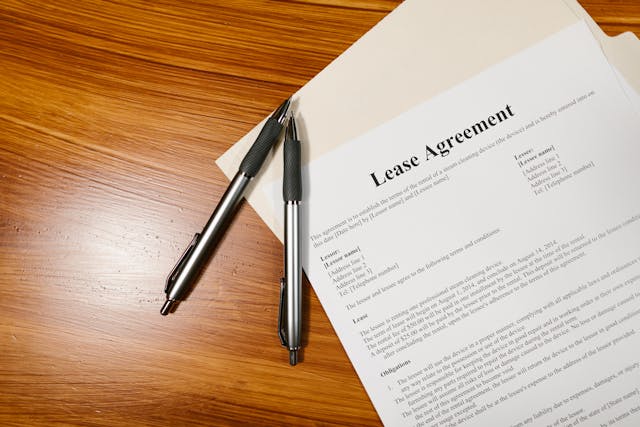
Looking closely at your lease agreement is the absolute first step when a tenant leaves owing money. This document acts as the legal backbone for your entire collection effort. It clearly outlines what happens when a resident defaults, ensuring you understand your rights to pursue the remaining balance before taking any further action.
To do this properly, pull out the signed contract and locate the sections on security deposits and lease violations. You want to verify the exact late fee policies, the defined penalty periods, and any specific clauses about unpaid rent. Highlighting these exact terms gives you a precise roadmap to hold the former tenant accountable.
This is where partnering with a property management team is especially useful.
Document the Property Condition
Documenting the exact condition of your property the moment a resident moves out is your best defense against false claims. Thorough inspection records prove that the money kept from the deposit was used for legitimate repairs rather than normal wear and tear. Without this solid proof, recovering the remaining unpaid rent becomes incredibly difficult.
You should walk through the empty unit with a standardized checklist, taking high-resolution photos and videos of every room. Focus closely on any damaged areas, missing appliances, or uncleaned spaces. Make sure your timestamps are accurate, and have a witness sign off on the final condition report to establish undeniable evidence.
Calculate the Exact Amount Owed
Calculating the exact amount owed prevents you from looking unreasonable if the dispute escalates to a courtroom. Judges expect landlords to present a precise, mathematical breakdown of all financial damages. By separating unpaid rent from physical damages, you show the court that your deductions are fair, justified, and based entirely on factual accounting.
Gather all your financial records, including the tenant ledger, cleaning receipts, and contractor invoices for repairs. Subtract the security deposit from the total combined sum of these expenses. Write this final number down clearly, ensuring every single charge is backed by a corresponding receipt or documented proof of the actual cost incurred.
Send an Itemized Statement
Sending an itemized statement is a strict legal requirement in almost every state when withholding any portion of a deposit.

This formal notice tells the former tenant exactly why their money was taken. Failing to send this document within your specific state's deadline can result in you losing the right to collect anything at all.
Draft a clear letter listing every single security deposit deduction alongside its corresponding cost, then mail it to the tenant's forwarding address via certified mail. Keep the return receipt safe, as it serves as your legal proof of delivery. Be sure to include any remaining balance owed so the tenant knows exactly what they still need to pay.
Issue a Formal Demand Letter
Sending a formal demand letter serves as a professional wake-up call to a former tenant who still owes you money.
This written notice clearly states the remaining debt and demonstrates that you are serious about recovering your lost rental income. It also creates a useful paper trail showing you attempted to resolve the issue outside of court.
Write a straightforward business letter detailing the exact amount due and provide a strict deadline for payment, typically ten to fourteen days. Clearly state that failure to pay will result in legal action. Send this document via certified mail to the tenant's last known address so you have official proof of your collection attempt.
Understand Your State Collection Laws
Understanding the specific collection laws in your state is critical because landlord regulations vary drastically across different regions. Knowing these rules prevents you from making accidental legal missteps that could invalidate your claim. It ensures your collection methods remain fully compliant, protecting you from potential counterclaims or penalties filed by a frustrated former resident.

Research your local statutes to verify the statute of limitations on debt collection and the maximum allowable limits for small claims court. Look up specific rules regarding charging interest on the unpaid balance. Bookmarking your state's landlord-tenant act online or consulting a legal guide will give you quick access to these essential localized guidelines.
File a Lawsuit in Small Claims Court
Filing a lawsuit in small claims court is usually the most practical way to force a former tenant to pay what they owe. This venue is specifically designed for straightforward financial disputes without the need for expensive attorney fees. Winning a judgment here gives you the legal power to garnish wages or levy bank accounts.
Visit your local county courthouse to fill out the required plaintiff forms, paying the nominal filing fee. You will then need to formally serve the paperwork to the tenant using a professional process server. On your hearing date, present your lease, photos, receipts, and itemized statement to the judge in a clear, organized manner.
Consult a Real Estate Attorney
Consulting a real estate attorney becomes essential when you are dealing with a massive debt or a highly uncooperative former resident. Legal professionals offer tailored advice to ensure your entire collection process is bulletproof. Having an expert review your case prevents costly procedural errors and drastically increases your chances of successfully recovering your money.
Search for a local lawyer who specializes strictly in landlord-tenant law and schedule a brief consultation.

Bring every piece of documentation you have gathered, including the lease, correspondence, and financial records. Ask them to evaluate the strength of your case and outline the most cost-effective legal strategy to secure a winning judgment in your area.
Bottom Line
Dealing with unpaid rent and complex legal steps is exhausting. We at Foothills Properties take this heavy burden off your shoulders. As your dedicated property management partner, we handle everything from rigorous lease enforcement to meticulous deposit tracking.
You should not have to navigate these stressful financial hurdles alone. Contact Foothills Properties today to discuss your options, and we will help you find the exact property management solution that is right for you.
Frequently Asked Questions About Unpaid Rent and Security Deposits
Can A Security Deposit Be Applied To Unpaid Rent?
A security deposit may be relevant when a tenant leaves an unpaid balance, but owners should apply it according to the lease and applicable Arizona requirements rather than treating it as an automatic payment toward rent. The final accounting should clearly distinguish unpaid rent from other allowable charges and should be supported by the property's records.
Because deposit handling is governed by state law and specific circumstances can affect an owner's obligations, we recommend verifying the current requirements before making deductions. Our management process includes security-deposit handling as part of the move-out process.
What Should Owners Document When A Tenant Leaves A Balance?
Owners should maintain a complete record showing how the balance was calculated and why any deposit deductions were made. Useful documentation can include the signed lease, rent ledger, move-in and move-out condition records, photographs, invoices, receipts, and written communications related to the account.
Keeping these records together creates a clearer financial history if the former tenant disputes the amount. We use documented move-out procedures and security-deposit reconciliation to help keep the property's records organized and support a consistent accounting process.
Should A Landlord Send An Itemized Statement For Deposit Deductions?
Owners should provide the documentation required by applicable Arizona law when handling a security deposit. An itemized accounting can help explain how the deposit was applied and distinguish legitimate charges from the remaining balance.
However, the exact contents, timing, and delivery requirements should be verified against current Arizona law rather than relying on a generalized national rule. We treat deposit reconciliation as a documented part of the move-out process and maintain records associated with the property's financial activity.
When Should An Owner Consider Professional Help With Unpaid Rent?
Professional management can be useful when an owner wants a consistent process for rent collection, lease enforcement, move-out documentation, accounting, and deposit reconciliation. The decision can be particularly relevant for owners managing multiple properties or properties from outside the immediate area.
Owners facing a specific legal dispute should still consult an appropriately qualified attorney for legal advice.
Can An Owner Pursue A Former Tenant For A Remaining Debt?
An owner may have collection options when a former tenant leaves an unpaid balance, but whether and how a debt can be pursued depends on the lease, the amount involved, applicable Arizona law, and the facts of the case.
Arizona courts provide civil and small-claims procedures for monetary disputes, with different rules and jurisdictional limits depending on the type of case. We recommend keeping the lease, accounting records, deposit documentation, and supporting invoices organized before considering further action, and consulting an attorney.